
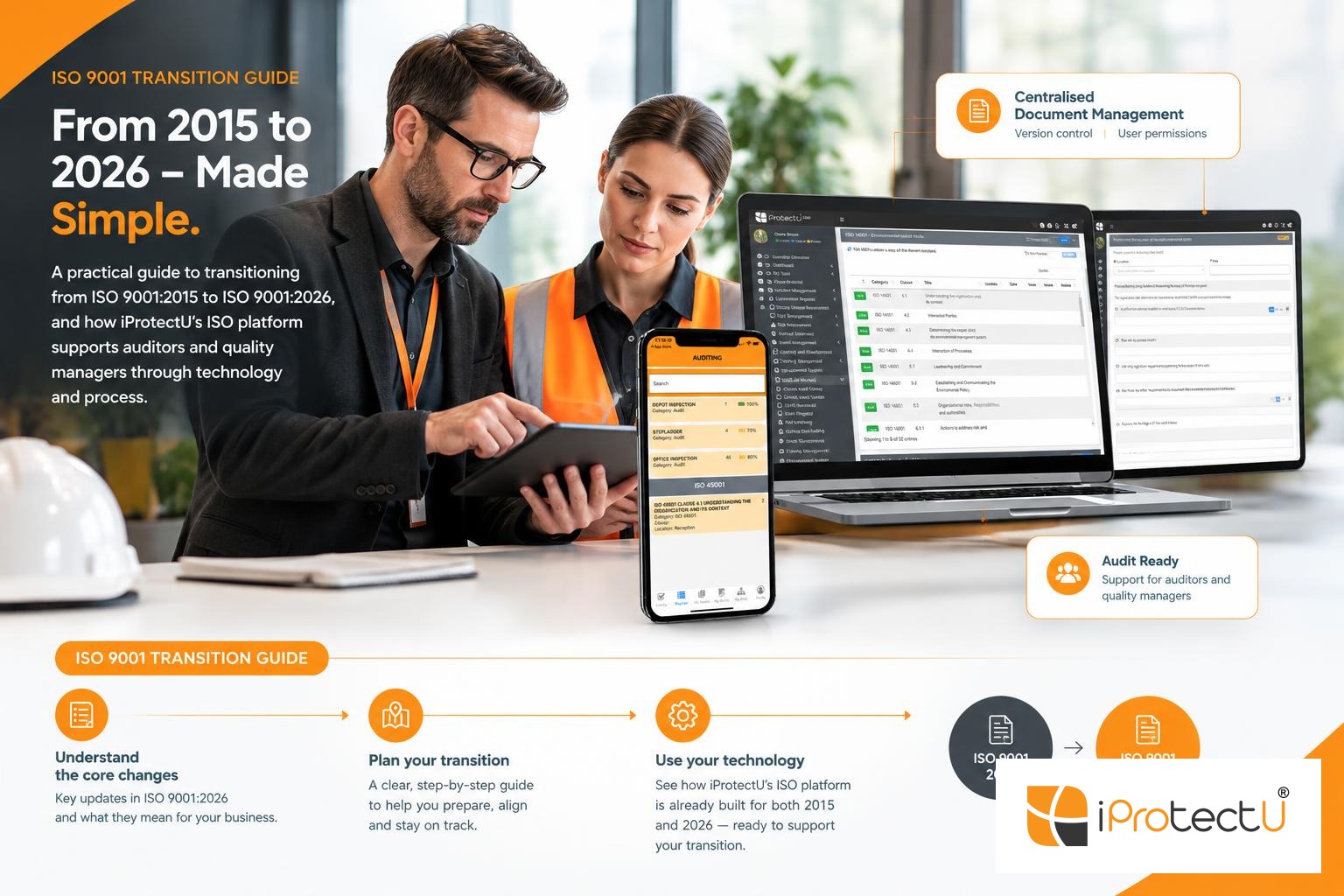
ISO 9001 is recognised worldwide as the essential benchmark for quality management systems in all types of organisations. As the quality landscape shifts from ISO 9001:2015 to the new ISO 9001:2026 standard, auditors play a crucial role in ensuring that organisations make this leap in a structured and practical way. This guide covers what’s changing, how to address gaps, and where technology, especially iProtectU’s ISO Auditor and Document Management modules, streamlines the transition process and ongoing audit work.

Understanding the Scope and Direction of ISO 9001:2026
ISO 9001 is regularly reviewed to ensure its ongoing relevance. The move from the 2015 edition to ISO 9001:2026 reflects both evolving business challenges and opportunities arising from digital technology, sustainability expectations, and new risk landscapes. Auditors need to interpret not only the new requirements, but also the rationale and practical impacts behind each major shift.
The core principles of ISO 9001 remain: process approach, risk-based thinking, customer focus, and continual improvement. However, the next revision tightens and updates many provisions so that quality management, rather than being static or paperwork-driven, is embedded into digital workflows, informed by broader stakeholder feedback, and is visibly supported by organisational leadership.
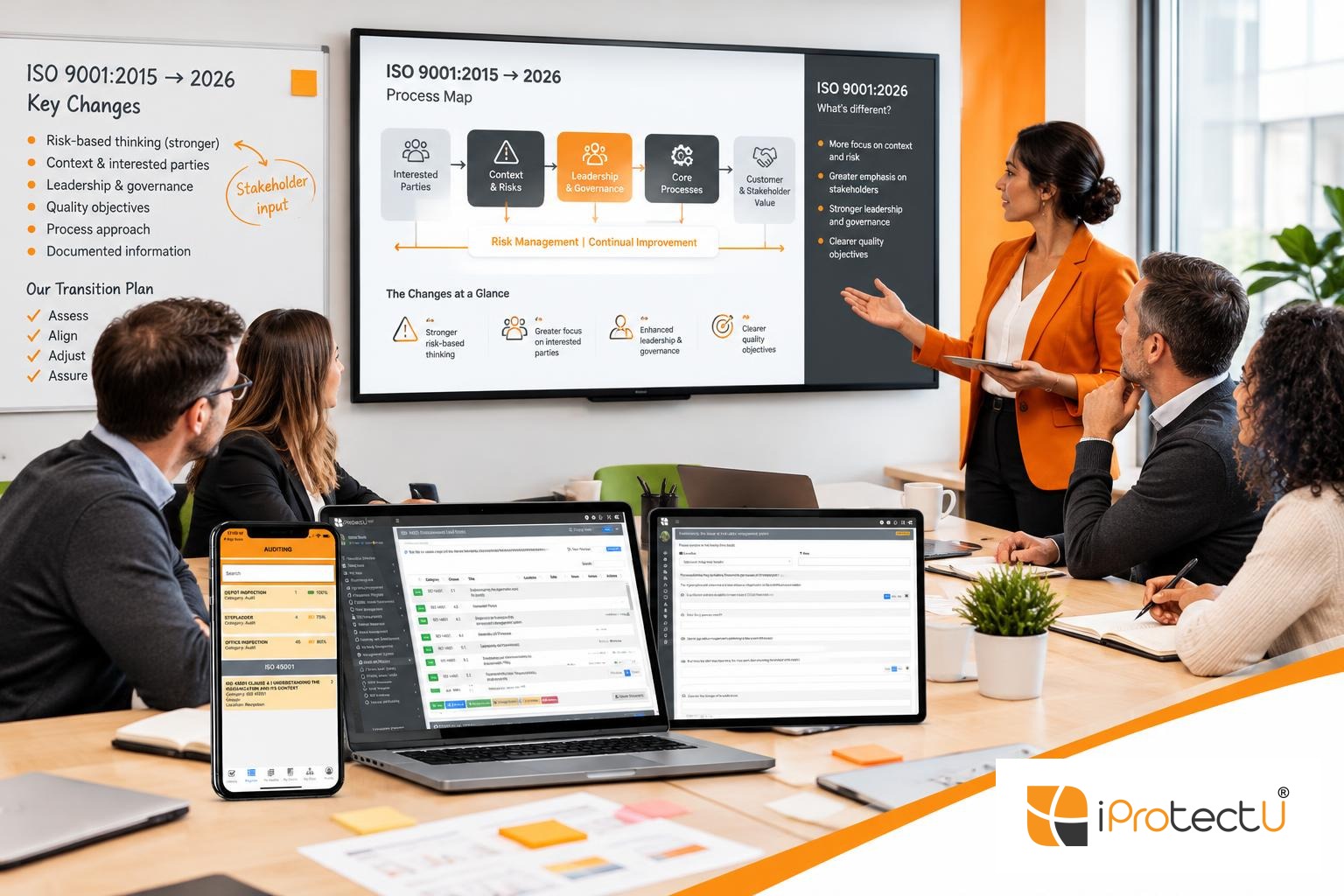
Key Themes in the New Standard
- Strengthened requirements for identifying and addressing risks and opportunities, with an expectation for more robust, up-to-date documentation
- Improved integration of digital tools including records management, remote collaboration, and process automation
- Clearer expectations for visible leadership engagement and wider stakeholder participation in quality processes
- Emphasis on sustainability and corporate social responsibility as part of quality context
- Expanded guidance for managing digital documented information, from version control to traceability and access management
Breaking Down the Core Changes
Before any organisation can plan its transition, auditors and quality leaders must fully appreciate what is truly different about 2026. Each change affects not just documentation, but day-to-day quality practice and evidence gathering. Below are the core changes and what they mean in practical terms:
1. Enhanced Risk-Based Thinking
The 2015 version introduced risk-based thinking, but the new edition will specify how risks should be systematically identified, assessed, and managed throughout processes. Auditors will need to check not only whether risk assessment is being carried out, but also whether it’s regularly updated, linked to business outcomes, and reflected in both preventive action and change management.
2. Integration with Digital Processes
The standard addresses the shift to digital workplaces, including the use of audit and document management software for recordkeeping, evidence capture, communication, and remote working. Expectations around audit trails, digital signatures and process automation increase, which means auditors must review both the effectiveness and security of digital records and workflows.
3. Leadership and Stakeholder Inclusion
Leadership is no longer just about setting policy. Top management must be actively visible in promoting quality culture and listening to various stakeholder groups, internal staff, customers and even community partners. Auditors must look for practical involvement, such as minutes of leadership reviews, open forums, or leadership-driven quality communications.
4. Sustainability and Social Responsibility
The new standard encourages organisations to embed sustainability, such as resource use or labour practices, and social responsibility within their quality context. This means auditors may need to review if and how environmental or social impacts are considered in the planning and evaluation of quality objectives, with supporting evidence.
5. Documented Information and Digital Control
Whereas previous audits often saw evidence scattered across various files and platforms, ISO 9001:2026 specifies the need for disciplined, clearly managed, and easily retrievable digital documentation. Auditors should be able to verify version control, authorisation, secure access, and an audit trail for each key quality document.
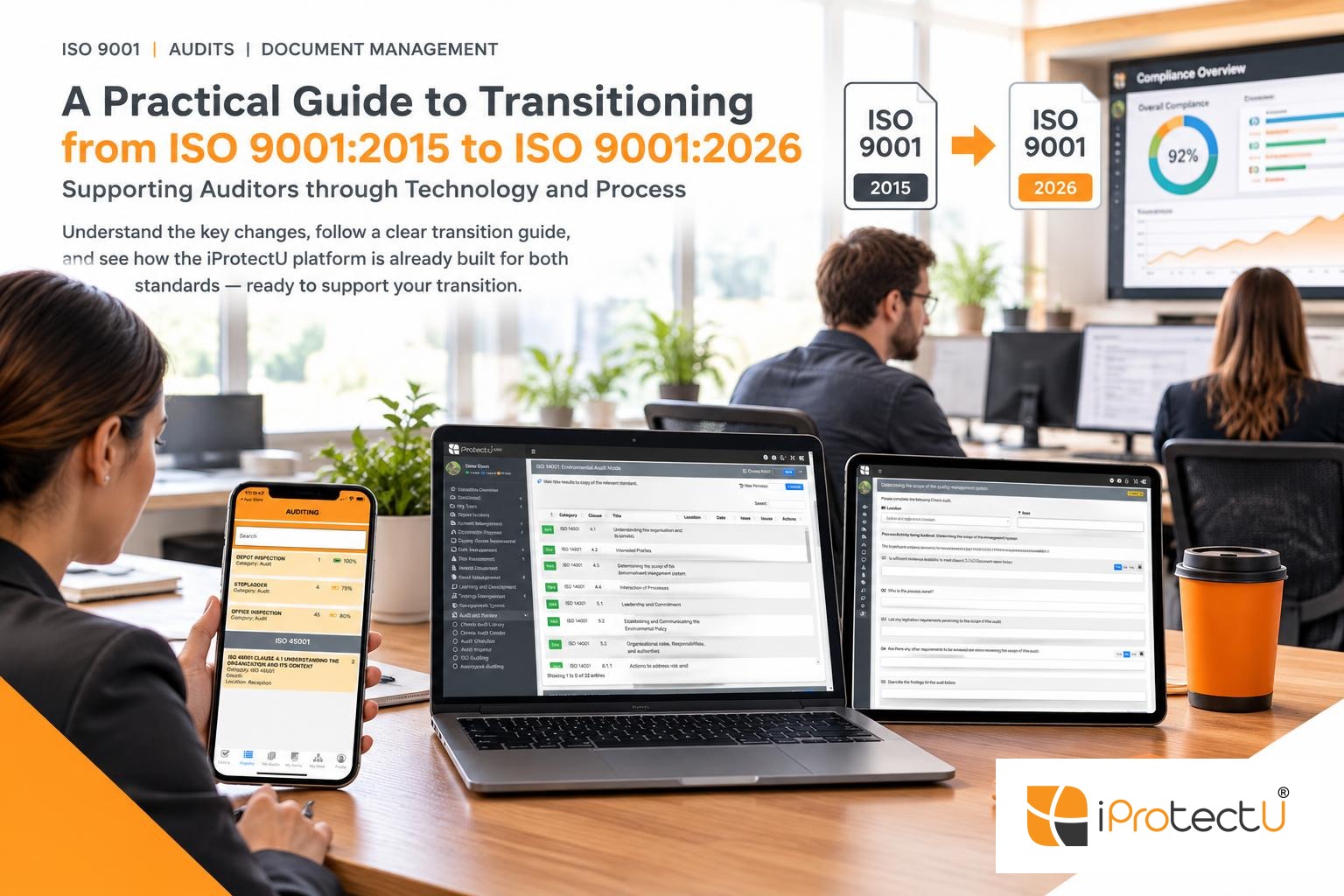
Mapping Requirements: Comparing 2015 to 2026
Auditors must bridge the gap between existing compliance and new requirements. A methodical gap analysis is essential to identify where attention, training or updated controls will be needed.
Key Steps for Gap Mapping:
- List current controls for each clause of ISO 9001:2015
- Compare against emerging or draft requirements for ISO 9001:2026
- Look for areas where requirements have intensified, such as stakeholder feedback or digital traceability
- Note where new documentation, workflows, or involvement is now mandatory
- Assign responsibility for each gap and confirm action owners
In practice, this may involve workshops or working groups where heads of departments, process owners, and quality managers systematically walk through the clauses, assisted by auditors. Use centralised tools to record findings, assign actions and monitor progress, this is where the ISO Auditor module excels, giving all parties visibility and structure.
Step-by-Step Transition Guide for Auditors
Transitioning doesn’t need to be overwhelming. The following detailed roadmap walks through proven steps that auditors can adapt to different business contexts.
Step 1: Review Current Practices
Begin with an honest assessment of how quality is managed today. Use a blend of document analysis, staff interviews, process observations, and system reviews. Ask:
- Is the current QMS actively used, or is it theoretical?
- Where is documented information stored, and how easy is it to retrieve?
- Are risk registers, audits and stakeholder communications up-to-date and central?
For example, an organisation might believe its risk assessments are current, but evidence may reveal outdated, unreviewed spreadsheets. An integrated platform like iProtectU helps auditors quickly highlight such weaknesses through dashboards and status logs.
Step 2: Conduct a Gap Analysis
Build an evidence-based action plan by directly comparing current controls to the new standard:
- Prepare a comparison grid or checklist
- Highlight green (compliant), amber (needs review), red (not compliant)
- Document specific issues, e.g., ‘no formal leadership review minutes’, ‘no evidence of digital traceability on process changes’
Suppose the organisation stores customer complaints only in local email folders. The 2026 update expects secure, accessible, timestamped records with linked corrective actions, gaps like these should be clearly documented with action plans.
Step 3: Centralise and Digitise Documented Information
Many transitions stumble on poor document control. Auditors should recommend, and where possible help implement, a central digital platform, such as the Document Management module, so that all evidence, policies, templates and records are:
- Logged in a single place with clear versioning and approval status
- Assigned clear ownership and review triggers
- Secured with access control and full audit trail for edits
- Searchable and retrievable within minutes
Pragmatic tip: Audit a sample of key documents. For each, check for version control, “last reviewed” dates, electronic signatures, and whether the current version reflects recent changes in practices or leadership reviews.
Step 4: Engage and Train Stakeholders
Requirements for leadership and staff engagement are stronger than before. Auditors can help set up a transition steering group or regular briefings to explain:
- The main differences and reasons for the new standard
- Who needs to do what and by when
- What good evidence looks like, clear, consistent, and up-to-date
Front-line teams benefit from simple guides, checklists, and practical examples, such as sample risk logs, approved templates, and best practice review minutes. Digital document management lets auditors and managers confirm that briefings have occurred and that new practices are embedded.
Step 5: Pilot Changed Processes
Piloting is essential before large-scale roll-out. Select a high-risk or high-impact area, say, procurement or production, test new risk assessment or document management workflows, and gather staff feedback. Auditors should observe:
- Whether evidence is recorded as planned
- Ease of use and barriers for staff or management
- Early warning of unintended consequences or gaps
Record findings in the iProtectU ISO Audit module and use these to adjust processes and templates before wider implementation.
Step 6: Run Realistic Internal Audits
With pilot and training complete, run internal audits using the new standard. Involve different audit team members to get a balanced assessment. These should cover:
- Are risk and opportunity registers up-to-date, accessible, and actionable?
- Can you trace digital signatures and approval chains for all key changes?
- Does documented information match actual practice on the ground?
If nonconformities are found, record what happened, who is responsible for corrective action, and when a follow-up is due. Digital audit systems allow these to be tracked and flagged easily.
Step 7: Maintain Continuous Review Cycles
ISO 9001 now expects quality management to be part of ongoing business and not something dusted off for the annual audit. Auditors should help set up quarterly or half-year reviews where evidence, policies and procedures are systematically re-examined for compliance and improvement opportunities.
Real-World Transition Examples
To bring these concepts to life, let’s look at practical uses in different workplaces:
Case: Manufacturing, Strengthening Risk Registers
Previously, a medium-sized parts manufacturer bundled all quality risks into a single spreadsheet. After reviewing the gap with the 2026 requirements, the process now involves real-time risk logging, digital action tracking, and monthly review meetings. Meetings are recorded and evidence is centralised: risks are linked to process KPIs and followed through to resolution, with analytics demonstrating downward trends in recurring issues.
Case: Consulting, Handling Documented Information
An engineering consultancy shifted all operating procedures, client feedback, and quality logs into a Document Management platform. Version history, digital sign-offs and automated review reminders are all used. When an auditor requests training records or the latest policy, retrieval takes seconds. Change logs show who, when, and why a document was revised, supporting the traceability now expected.
Case: Construction, Leadership Review and Stakeholder Input
In a construction business, the leadership team holds quarterly quality strategy reviews. Auditors view minutes, actions and outcomes within the QMS, alongside digital feedback from subcontractors and clients. Evidence demonstrates that leadership are not just policy setters, but are engaged in regular review and continuous improvement, as required by ISO 9001:2026.
Auditor Practices and Evidence Records
Modern audit evidence is far more than tick-boxes or document folders. Examples that meet, and often exceed, emerging best practice include:
- Complete digital audit trails, showing timelines and responsible staff for every significant change
- Automatic training logs linked to specific new requirements or policy changes
- Stakeholder engagement records, such as customer and supplier feedback with linked follow-up actions
- Central logs for all corrective and preventive actions, with status updates and accountability
Auditors should advise on and validate these records, checking for clear ownership, security, and the ability to demonstrate consistent improvement. The Document Management module’s workflow tools and permission logs are particularly valuable in this context.
Typical Pitfalls and How to Avoid Them
No transition is without its bumps. The following errors are frequent and, with the right planning, avoidable:
- Lack of Top-Down Involvement: When leadership delegates transition tasks entirely to operational teams, gaps widen and uptake is weak. Build explicit leadership responsibilities into transition plans and audit schedules.
- Poor Electronic Document Control: Confusion over file versions, unauthorised edits or lost records undermines confidence. Use strict digital controls, with named owners and regular review cycles.
- Superficial Process Substitution: Simply changing headings or terms in documents without real changes to practice will not stand up under audit scrutiny.
- Delayed Stakeholder Feedback: Start collecting and actioning feedback early, especially from staff and regular process users.
- One-Off Approach: Treating transition as a single project, rather than building it into business-as-usual routines, leads to forgotten changes and stale policies. Build monitoring and review into regular schedules.
Supporting Transition with iProtectU’s Technology
Quality audits, if manually managed, become slow, fragmented, and liable to error. Using the right technology can make each audit cycle practical, repeatable and transparent. With reference to iProtectU’s functionalities:
ISO Audit Management Module
The ISO Auditor module enables:
- Preparation and delivery of audits to both ISO 9001:2015 and ISO 9001:2026
- Central audit planning, evidence logging and automated assignment of findings
- Real-time sharing and progress monitoring across distributed teams
- Scheduled follow-up reminders so nothing gets missed
This allows auditors and client teams to maintain a clear view of compliance status, next steps and areas for improvement, ideal for transition monitoring.
Document Management Module
Through the Document Management module, all quality and audit records are securely stored, versioned, and controlled. Key benefits include:
- Quick retrieval of any policy, record or template with a full change history
- Automated review and approval triggers, supporting regular refresh cycles
- Permanent audit trails for document edits, sign for new compliance needs and electronic signatures
- Role-based access, ensuring only the right people make or approve changes
Centralised and comprehensive document control makes it far easier to align with ISO’s modern requirements and meet auditor expectations during both the transition and routine audits.
Sustaining Progress after Transition
The work does not end with the first successful compliance audit to the new standard. Ongoing sustainability is built on:
- Regular, scheduled QMS reviews anchored by technology dashboards
- Continuous staff upskilling and new starter briefings mapped to updated procedures
- Recurrent stakeholder feedback loops, rapidly logged and actioned in central systems
- Routine documentation and practice health checks, e.g., annual process reviews, access audits, and data integrity tests
Technology helps make these checks systematic rather than ad hoc, ensuring lessons are learned and improvements are sustained well into future audit cycles.
Conclusion: Leading the Way with Good Practice
Transitioning to ISO 9001:2026 is both a technical and cultural challenge for many businesses. Auditors are best equipped when they blend up-to-date standards knowledge with adaptive communication, collaborative training, and digital tools that drive visibility and real accountability. With support from systems like iProtectU’s ISO Auditor and Document Management modules, organisations and their auditors can focus less on chasing paperwork and more on asking the right questions, sharing real-time evidence, and building a quality culture that not only complies, but thrives.
Remember: every step in this journey is a chance for genuine improvement. By approaching the transition as a shared, ongoing process and using the right technologies, auditors can help organisations turn requirements into real-world results.
FAQs
Our FAQs help you understand how iProtectU health and safety software can support your organisation.
For anything else, request a demo or contact our team.
REQUEST DEMOWhat are the main changes between ISO 9001:2015 and ISO 9001:2026?
ISO 9001:2026 emphasises enhanced risk-based thinking, digital integration, increased leadership and stakeholder engagement, greater focus on sustainability and social responsibility, and more robust requirements for managing digital documented information.
How can technology help auditors during the ISO 9001 transition?
Tech platforms like iProtectU’s ISO Audit Management and Document Management modules provide structure, evidence traceability, automated audit trails, centralised document control and workflow reminder features, making transitions more efficient and transparent.
Do organisations have to implement all changes immediately?
ISO transitions typically allow organisations a grace period to align with new requirements. It's best to plan early, perform a gap analysis, and use digital tools for phased updates and ongoing reviews to sustain compliance.
What is the role of leadership in the updated ISO 9001 standard?
Leadership must drive quality management, actively engage in review cycles, consider diverse stakeholders and sustainability, and ensure staff understand and apply updated processes across the organisation.
Can iProtectU's ISO Auditor support both ISO 9001:2015 and 2026 standards?
Yes. The iProtectU ISO Auditor module is designed to accommodate both ISO 9001:2015 and upcoming 2026 requirements, helping users plan, conduct, and evidence audits during the transitional period.
See ISO 9001 transition support in action
Ready to make your ISO 9001:2026 transition smooth and stress-free? Request a personalised demo of iProtectU’s ISO Audit Management and Document Management modules today and see how digital tools can support your compliance journey.
REQUEST A DEMO