







Health and Safety Software » Health and Safety Software News » Health and Safety » Health and Safety When Working in Confined Spaces
Health and Safety When Working in Confined Spaces
This can create several hazards for workers, including:
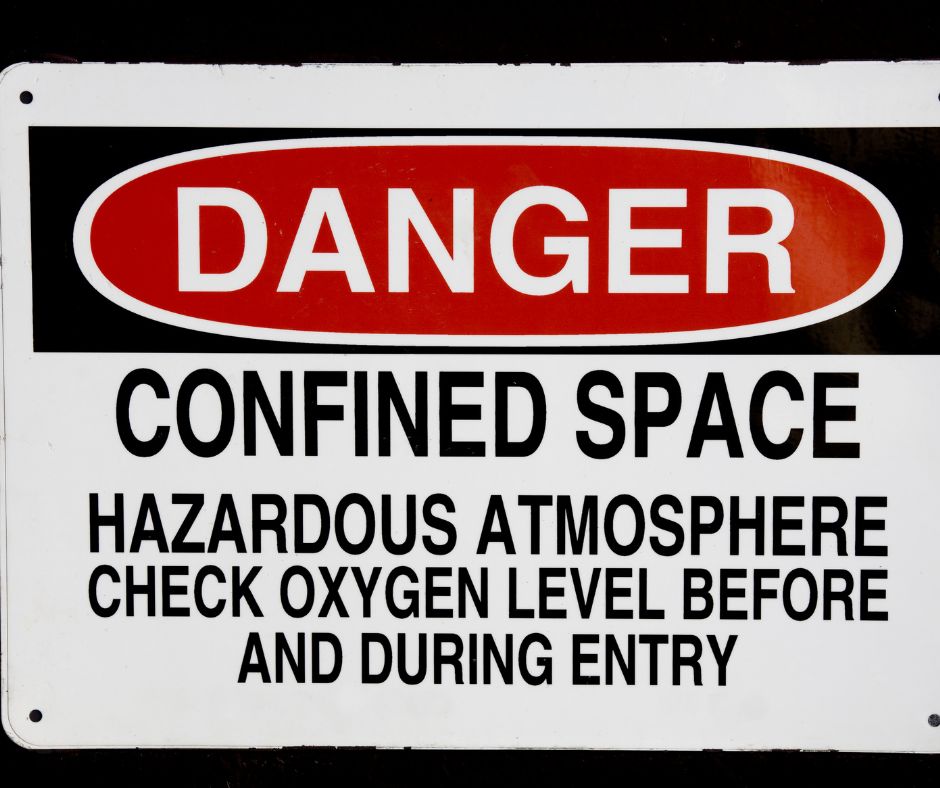
- Hazardous atmospheres: Confined spaces can contain hazardous atmospheres, including insufficient oxygen, toxic (poisonous) air, or an explosive atmosphere.
- Physical hazards: Confined spaces may also have physical hazards that may result, for example, in workers falling, being crushed or buried, or drowning.
- Other hazards: Confined spaces may also pose other hazards, such as electrical hazards, fire hazards, and biological hazards.
It is important to take safety precautions when working in confined spaces.
Tips for working safely in confined spaces:
- Assess the risks: Before entering a confined space, assess the risks and hazards present. This includes identifying the potential hazards, assessing the level of risk, and developing a plan to control the risks.
- Get authorisation: Once you have assessed the risks, you need to get authorisation from a supervisor or other qualified person before entering the confined space.
- Use the right equipment: You must use the right equipment to protect yourself from the hazards present in the confined space. This may include personal protective equipment (PPE), such as respirators, harnesses, and lifelines.
- Work with a buddy: It is always a good idea to work with a buddy when entering a confined space. If something happens to one person, the other person can help.
- Communicate: You need to be able to communicate with the outside world while you are in the confined space. This is important in case of an emergency.
- Have a rescue plan: Have a rescue plan in place in case something goes wrong. This plan should include who will be responsible for rescue, what equipment will be used, and how the rescue will be conducted.
Additional tips for working safely in confined spaces:
- Make sure the confined space is properly ventilated before entering.
- Do not enter a confined space if you are not feeling well.
- Be aware of the symptoms of hazardous atmospheres, such as dizziness, nausea, and headaches.
- If you experience any symptoms, leave the confined space immediately.
- Do not work alone in a confined space.
- Always have a way to communicate with someone outside the confined space.
- Have a rescue plan and ensure everyone involved knows what to do in case of an emergency.
By following these tips, you can help to prevent accidents and injuries when working in confined spaces.
The iProtectU health and safety software provides:
- An inspection and Audit App which allows for safety inspection of the workplace and associated report
- eLearning on a wide range of EHS topics
- Scheduling functionality for managers to send eLearning, risk assessments and documents out to all staff via the software with tracks completion and compliance
- Risk assessment template covering working in confined spaces
- Management system to document control the policy on working in confined spaces
- Method Statement module for the creation of work activity working instructions
- Legal register that provides legislation guidance on confined spaces
- Incident investigation module that tracks incidents involving working in confined spaces both with an app and via desktop
- Hazard observation app where staff can report and record any concerns regarding work in confined spaces to the organisation
- Asset management App ensuring assets are recorded in the software
Arrange your demonstration
Let us show you how we can transform your health and safety, risk and compliance management
Please choose a date and time for your demo. We look forward to meeting with you.
Latest Updates & Information

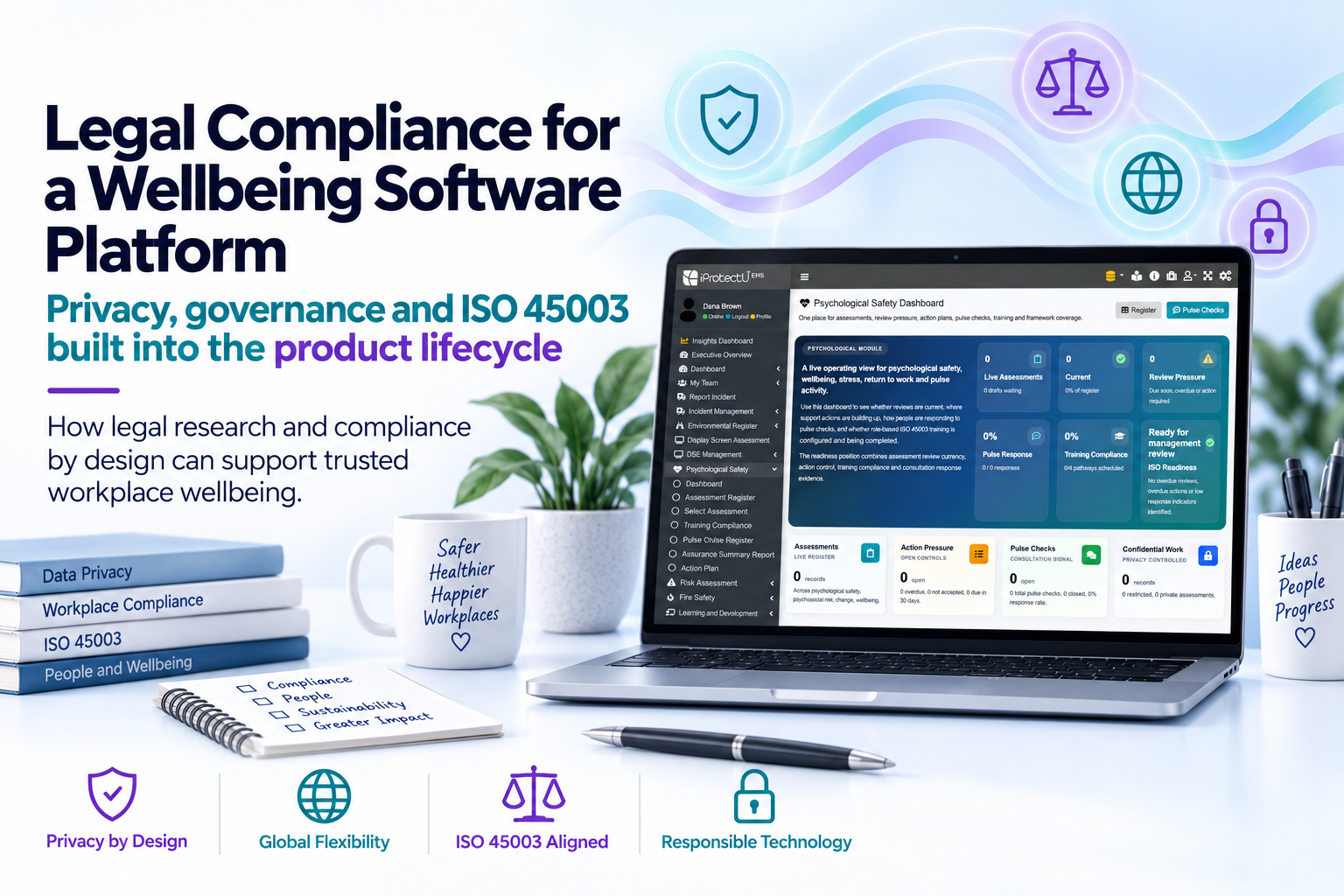
Legal Compliance for a Wellbeing Software Platform
Louis De Maria explains how legal research, privacy by design and ISO 45003 principles helped
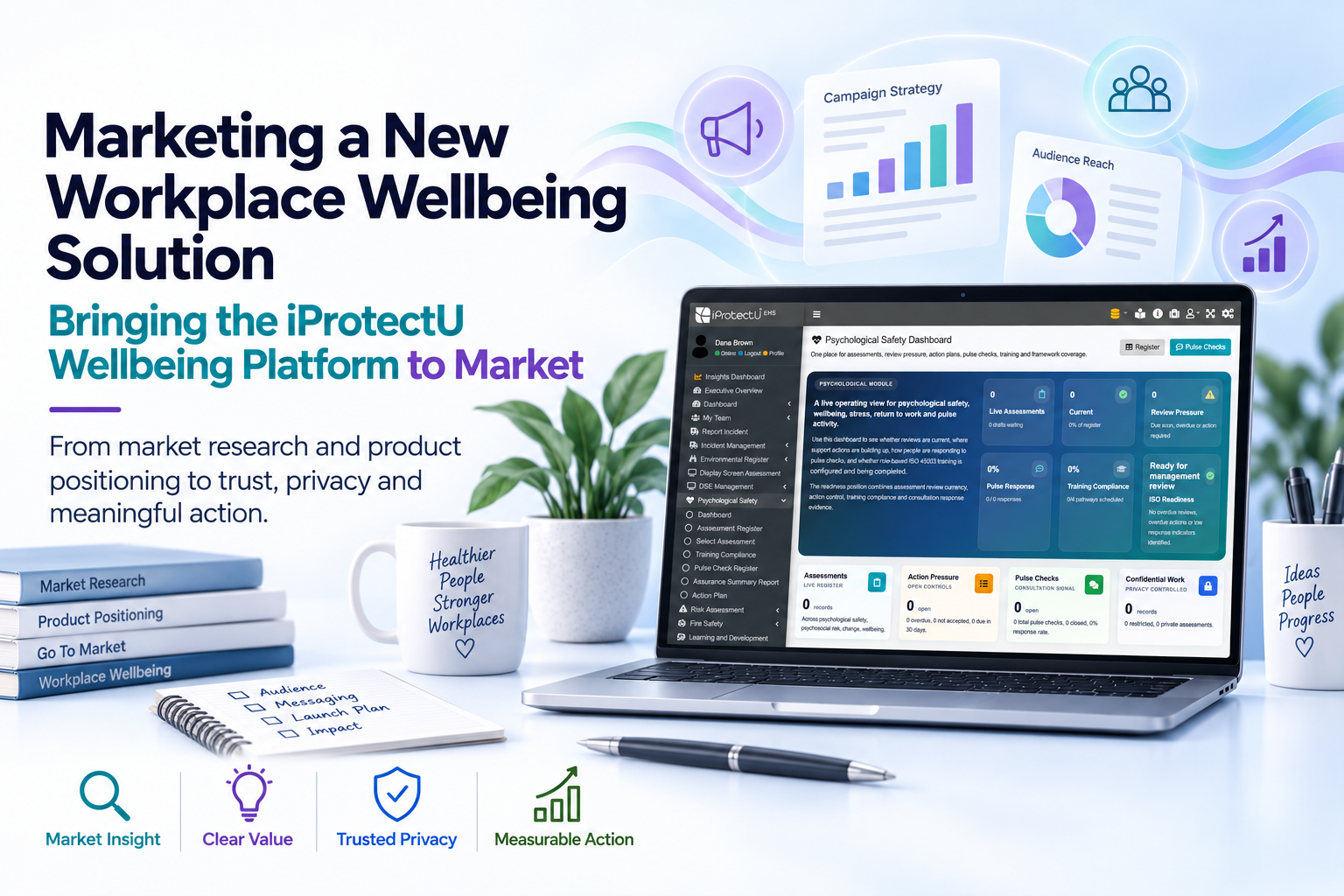
Marketing a New Workplace Wellbeing Solution: Bringing the iProtectU Wellbeing Platform to Market
Christie Richardson explains how market research, product positioning and trust helped bring the iProtectU Wellbeing

Neurodivergence in the Workplace: Strengthening Employee Wellbeing Through Inclusive Design
Hannah Beck shares how lived experience and inclusive design can help organisations support neurodivergent employees
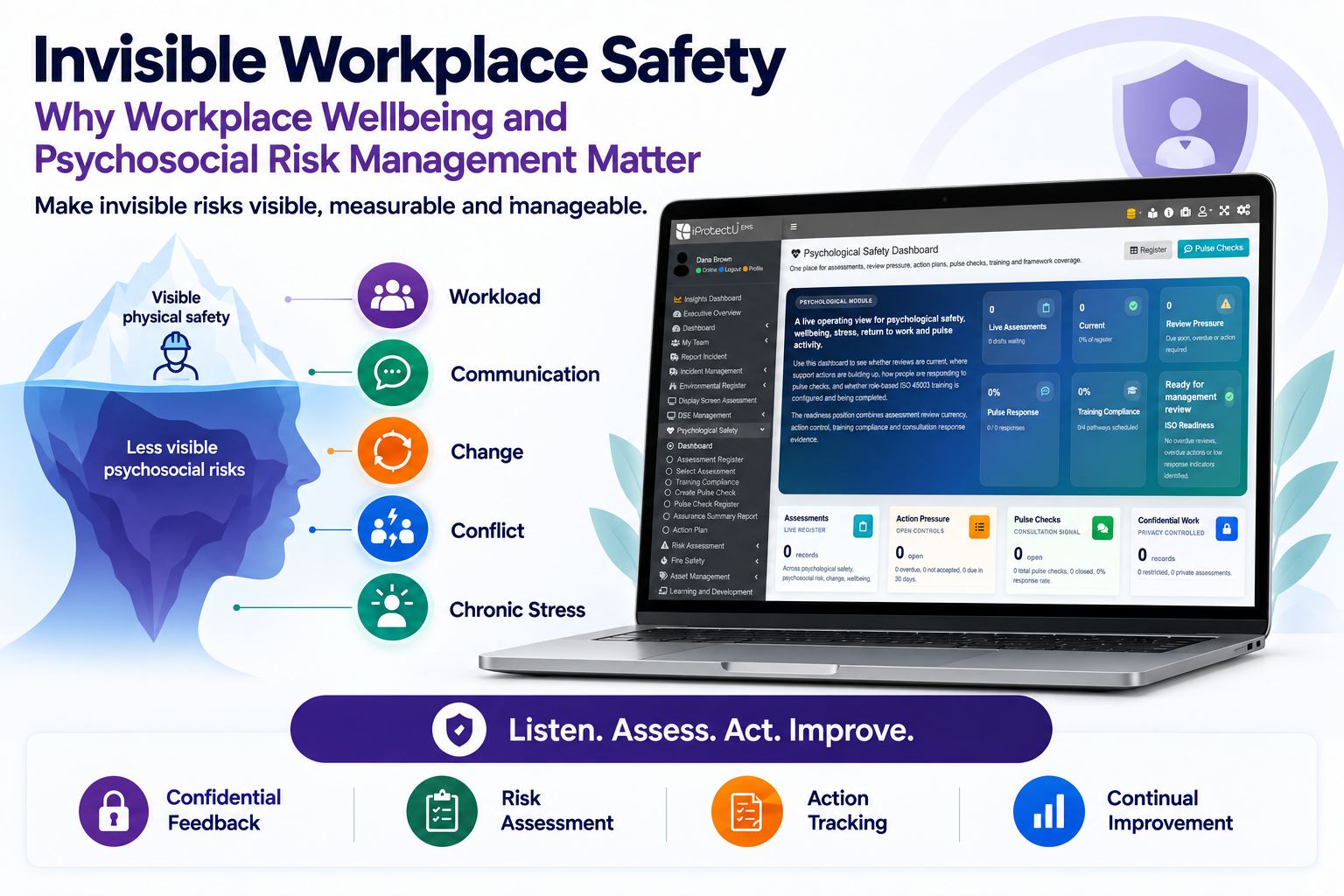
Invisible Workplace Safety: Why Workplace Wellbeing and Psychosocial Risk Management Matter
Emily MacLean explores the invisible psychosocial risks affecting workplace wellbeing and how organisations can turn
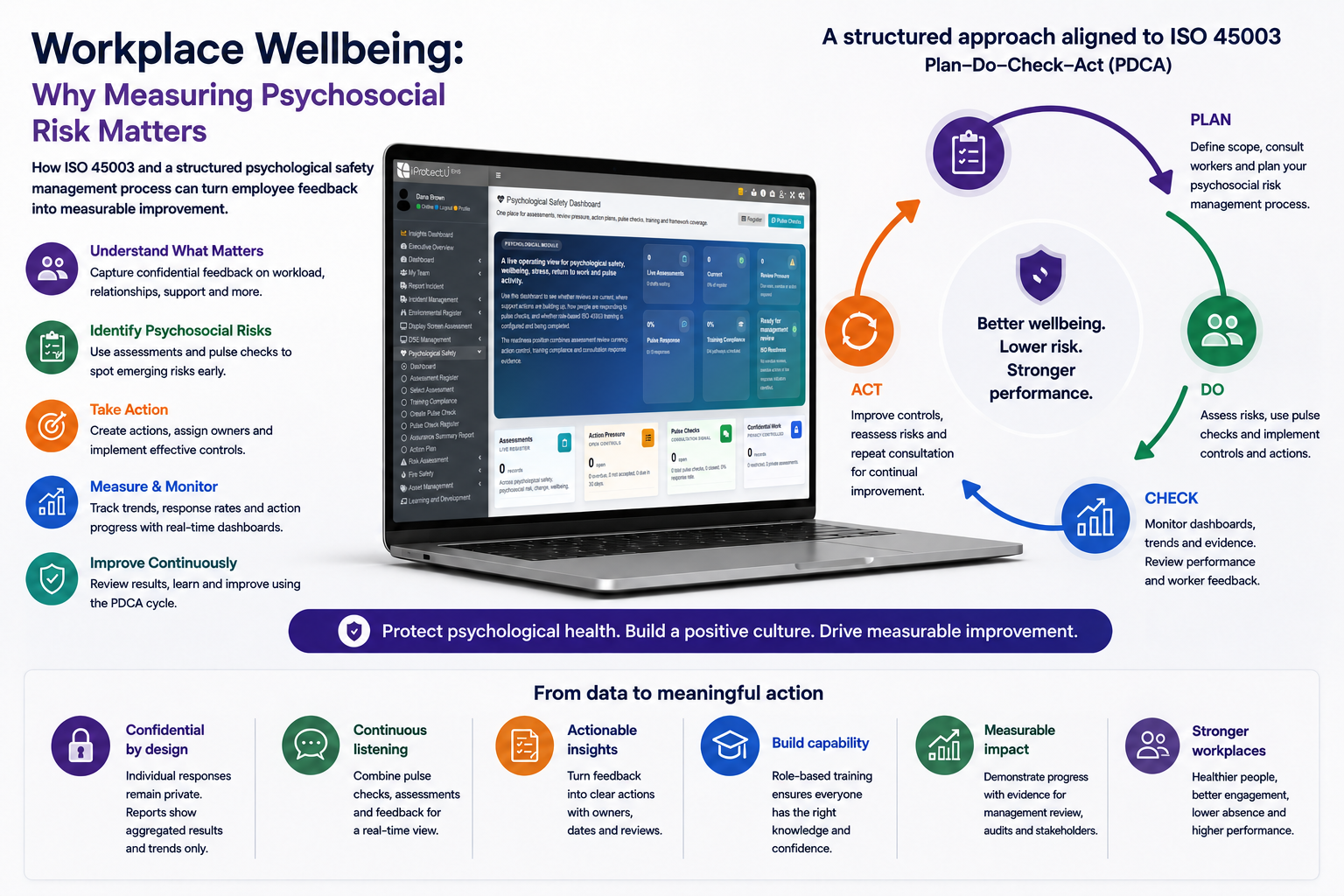
Workplace Wellbeing: Why Measuring Psychosocial Risk Matters
Celeste Weston explains why measuring psychosocial risk helps organisations turn employee feedback into action, improvement
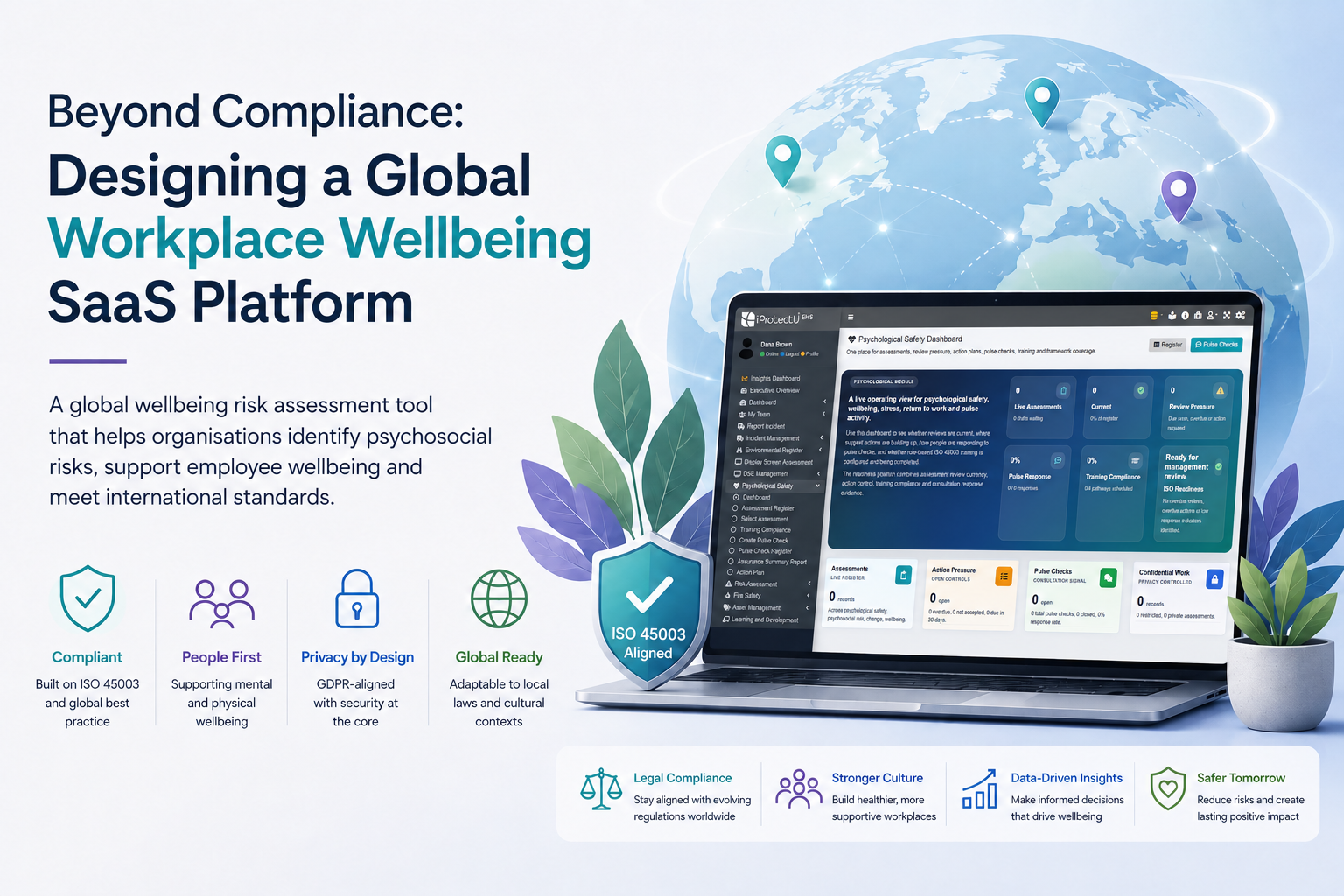
Beyond Compliance: Designing a Global Workplace Wellbeing SaaS Platform
Sophia Berg Merino reflects on helping create a global workplace wellbeing platform shaped by collaboration,
Arrange your demonstration
Let us show you how we can transform your health and safety, risk and compliance management
Please choose a date and time for your demo. We look forward to meeting with you.
Related Blogs

Legal Compliance for a Wellbeing Software Platform
Louis De Maria explains how legal research, privacy by design and ISO 45003 principles helped shape trusted workplace wellbeing software.

Marketing a New Workplace Wellbeing Solution: Bringing the iProtectU Wellbeing Platform to Market
Christie Richardson explains how market research, product positioning and trust helped bring the iProtectU Wellbeing Platform to modern employers.

Neurodivergence in the Workplace: Strengthening Employee Wellbeing Through Inclusive Design
Hannah Beck shares how lived experience and inclusive design can help organisations support neurodivergent employees and strengthen workplace wellbeing.
Latest News & Updates
Legal Compliance for a Wellbeing Software Platform
Louis De Maria explains how legal research, privacy by design and ISO 45003 principles helped shape trusted workplace wellbeing software.
Marketing a New Workplace Wellbeing Solution: Bringing the iProtectU Wellbeing Platform to Market
Christie Richardson explains how market research, product positioning and trust helped bring the iProtectU Wellbeing Platform to modern employers.
Neurodivergence in the Workplace: Strengthening Employee Wellbeing Through Inclusive Design
Hannah Beck shares how lived experience and inclusive design can help organisations support neurodivergent employees and strengthen workplace wellbeing.
Invisible Workplace Safety: Why Workplace Wellbeing and Psychosocial Risk Management Matter
Emily MacLean explores the invisible psychosocial risks affecting workplace wellbeing and how organisations can turn insight into meaningful action.
Workplace Wellbeing: Why Measuring Psychosocial Risk Matters
Celeste Weston explains why measuring psychosocial risk helps organisations turn employee feedback into action, improvement and stronger wellbeing.
Beyond Compliance: Designing a Global Workplace Wellbeing SaaS Platform
Sophia Berg Merino reflects on helping create a global workplace wellbeing platform shaped by collaboration, privacy, compliance and ISO 45003.