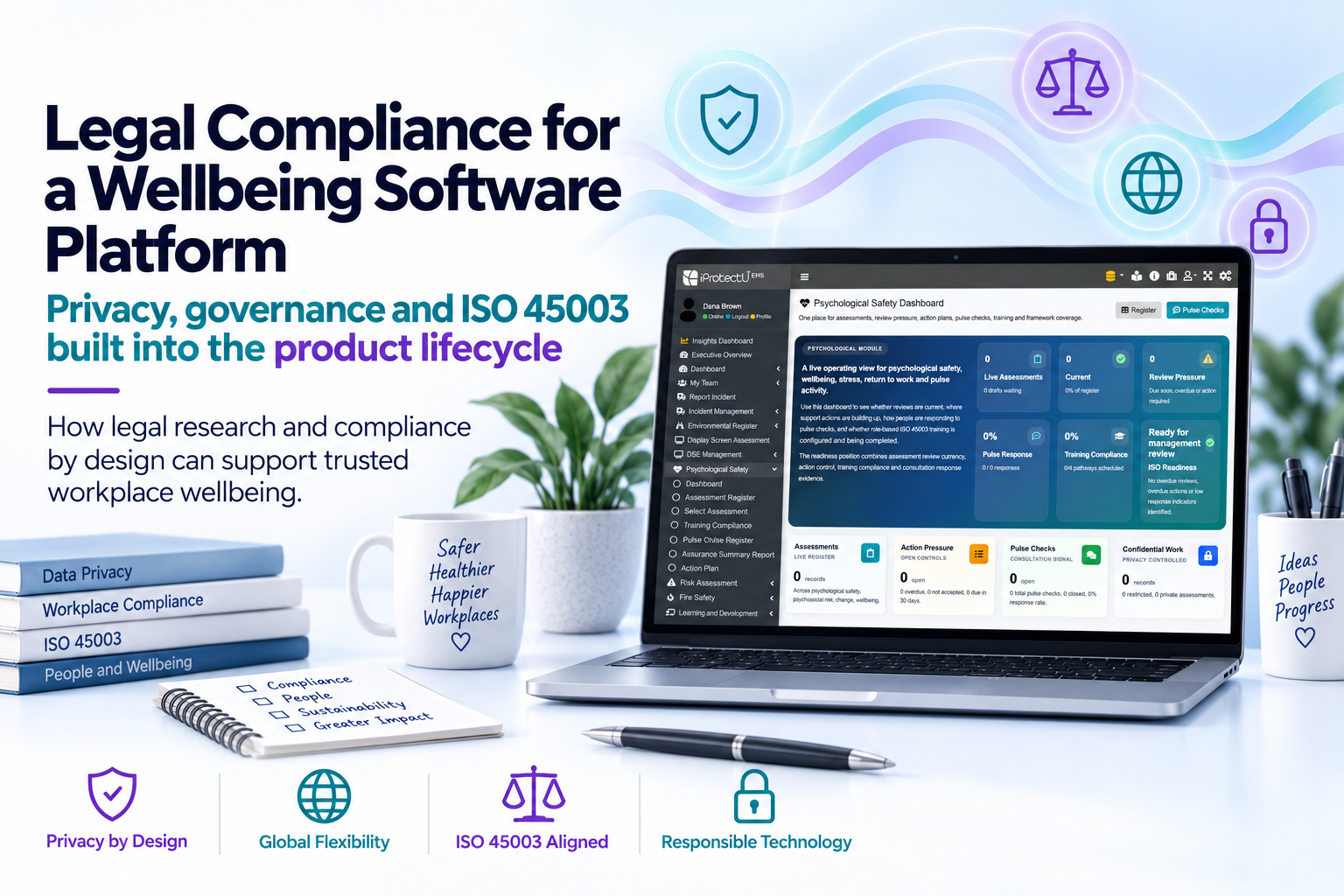
Legal Compliance for a Wellbeing Software Platform
Louis De Maria explains how legal research, privacy by design and ISO 45003 principles helped

Health and Safety Software » Health and Safety Software News » Health and Safety » Conducting a Stress Risk Assessment in the Workplace
As an employer, you have a legal duty to protect your employees from work-related stress. One way to do this is to conduct stress risk assessments for your employees.
A stress risk assessment is a process of identifying and evaluating the risks of work-related stress to your employees. It also involves developing and implementing measures to reduce or eliminate these risks.
Factors to consider when conducting a stress risk assessment
Methods used to conduct a stress risk assessment
After gathering sufficient information, you can start to identify and evaluate the risks of work-related stress. Once you have identified the risks of work-related stress, you can develop and implement measures to reduce or eliminate these risks. For example, you may need to:
Stress risk assessments are not a one-off process. They should be reviewed regularly to ensure that they are effective and that they consider any changes in the employee’s job role, workload, working conditions, relationships, or personal circumstances.
Additional considerations
It is important to consider all these factors when conducting a stress risk assessment to ensure that you are providing all your employees with adequate support.
By conducting stress risk assessments for your employees, you can help to identify and reduce the risks of work-related stress. This can lead to several benefits, including:
If you are not sure how to conduct a stress risk assessment, there are several resources available to help you. For example, in the UK, the HSE provides several guidance documents and tools on its website.
The iProtectU health and safety software provides:
Arrange your demonstration
Let us show you how we can transform your health and safety, risk and compliance management
Please choose a date and time for your demo. We look forward to meeting with you.

Louis De Maria explains how legal research, privacy by design and ISO 45003 principles helped

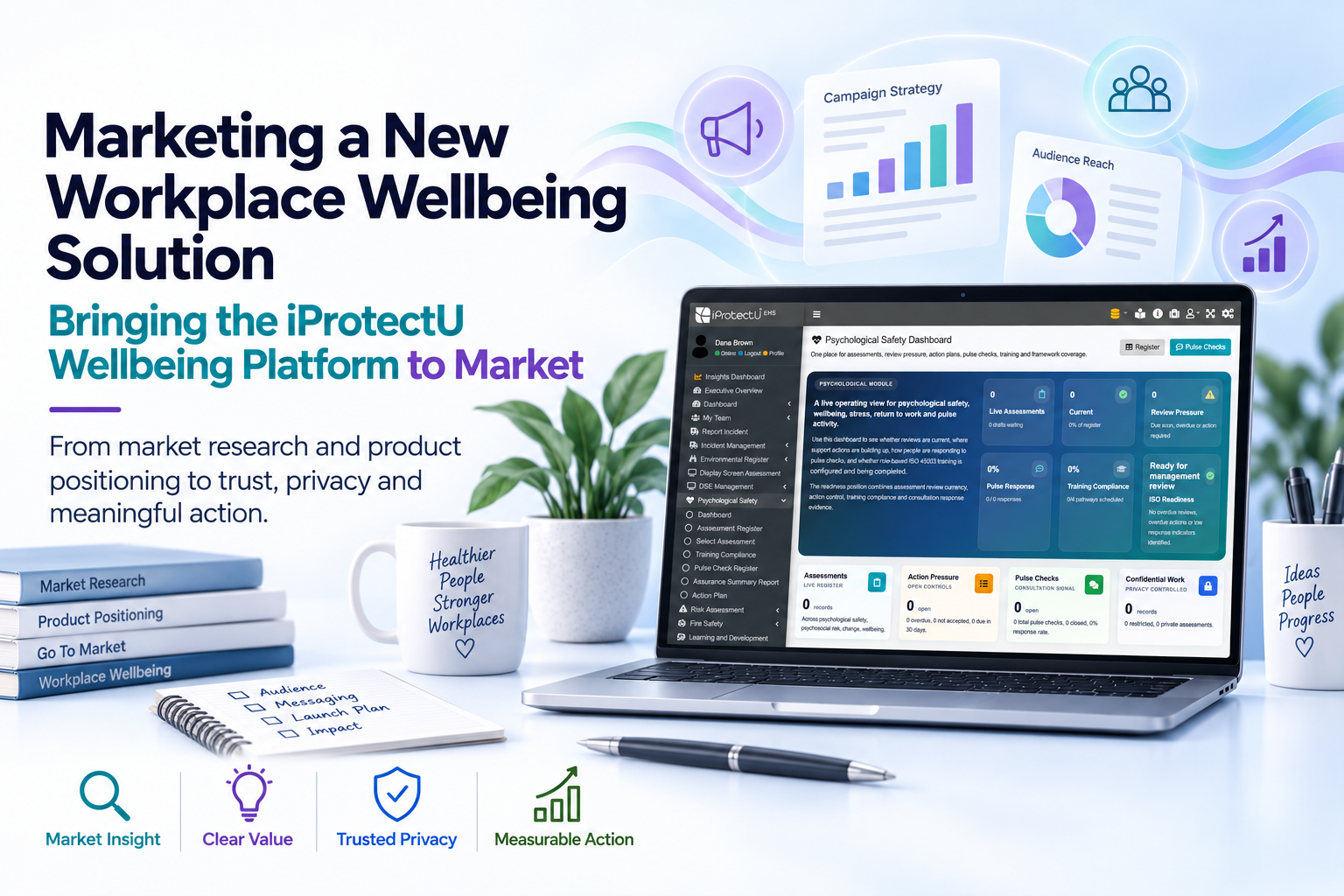
Christie Richardson explains how market research, product positioning and trust helped bring the iProtectU Wellbeing

Hannah Beck shares how lived experience and inclusive design can help organisations support neurodivergent employees
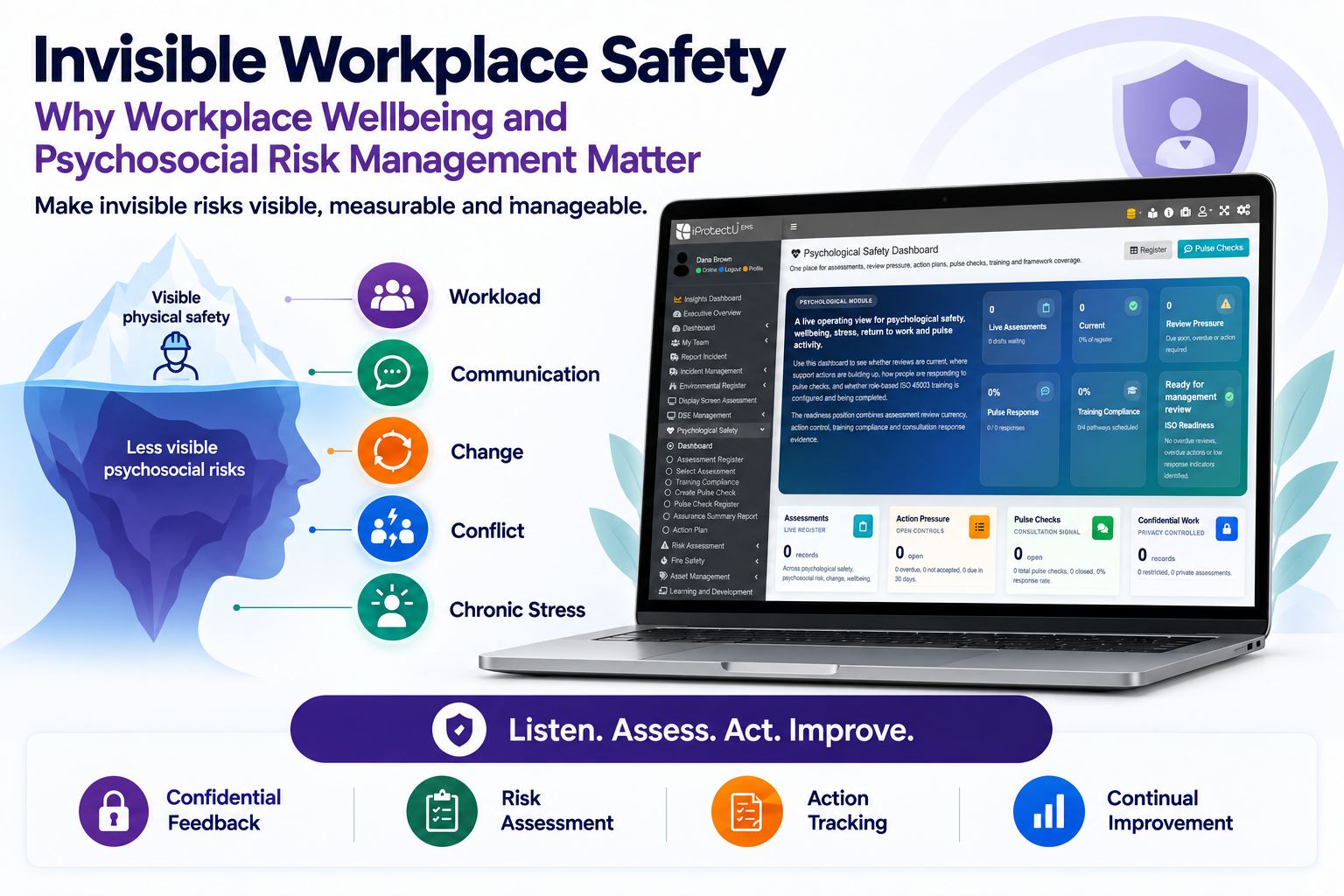
Emily MacLean explores the invisible psychosocial risks affecting workplace wellbeing and how organisations can turn
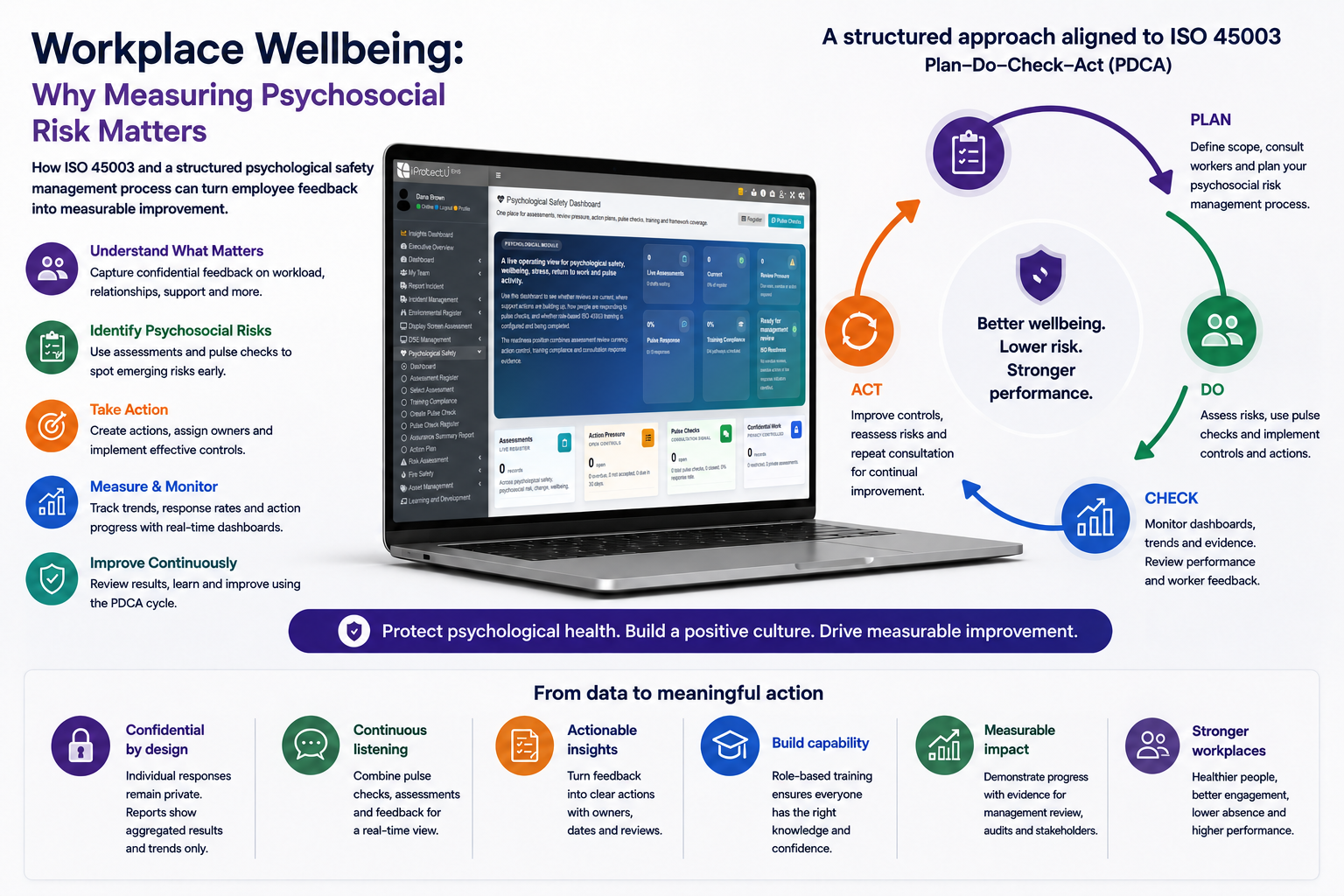
Celeste Weston explains why measuring psychosocial risk helps organisations turn employee feedback into action, improvement
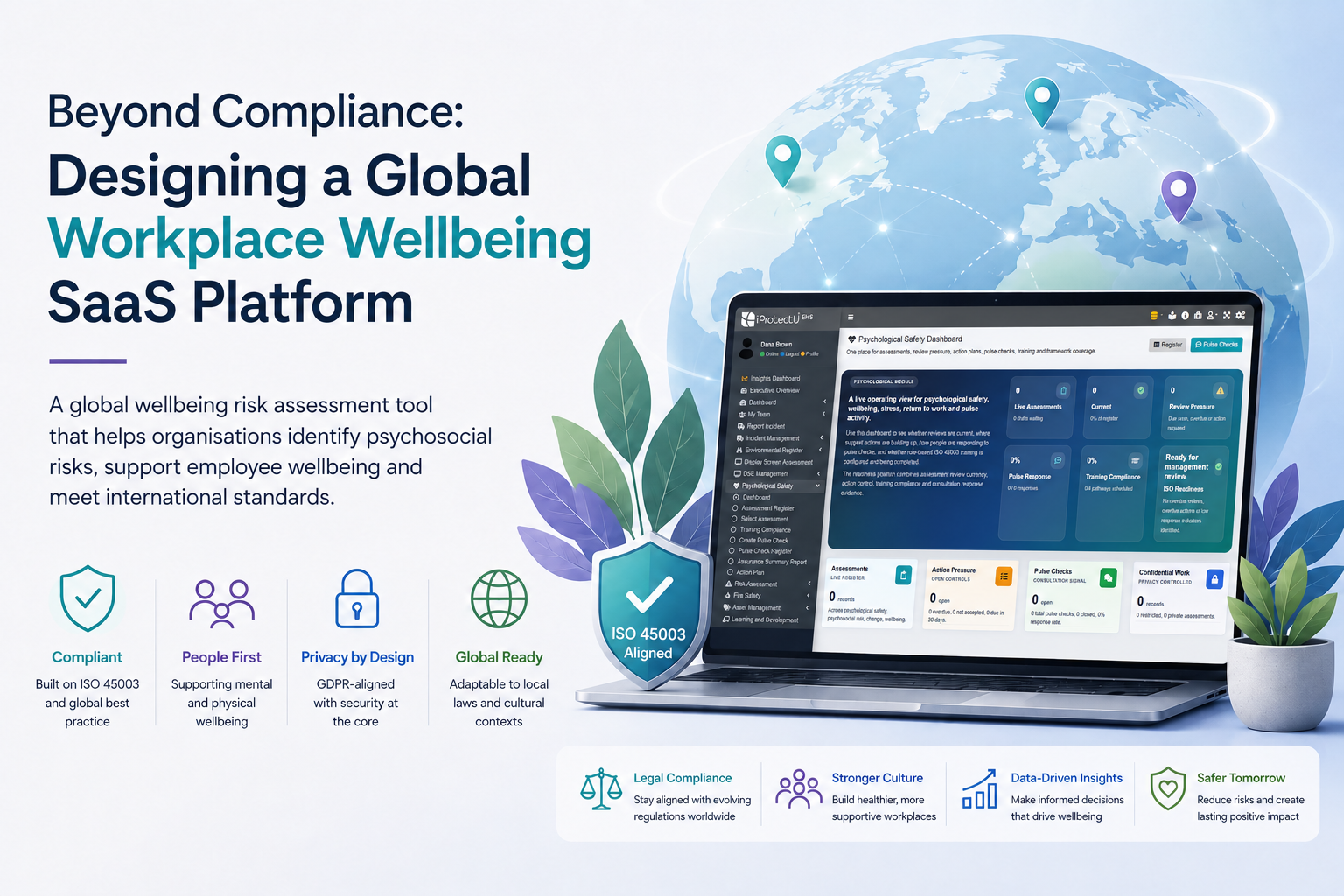
Sophia Berg Merino reflects on helping create a global workplace wellbeing platform shaped by collaboration,