Supporting Local Sustainability: Restoring Native Oysters to the Solent
iProtectU is proud to support the Final Straw Foundation’s Native Oyster Restoration Project, helping restore
Health and Safety Software » Health and Safety Software News » Risk Assessment » The Importance of Working at Height Training
It is imperative for employers to provide their employees with working at height training. This should cover the risks associated with working at height, the proper safety procedures, and the use of personal protective equipment (PPE).
The Benefits of Working at Height Training
Working at Height Training topics
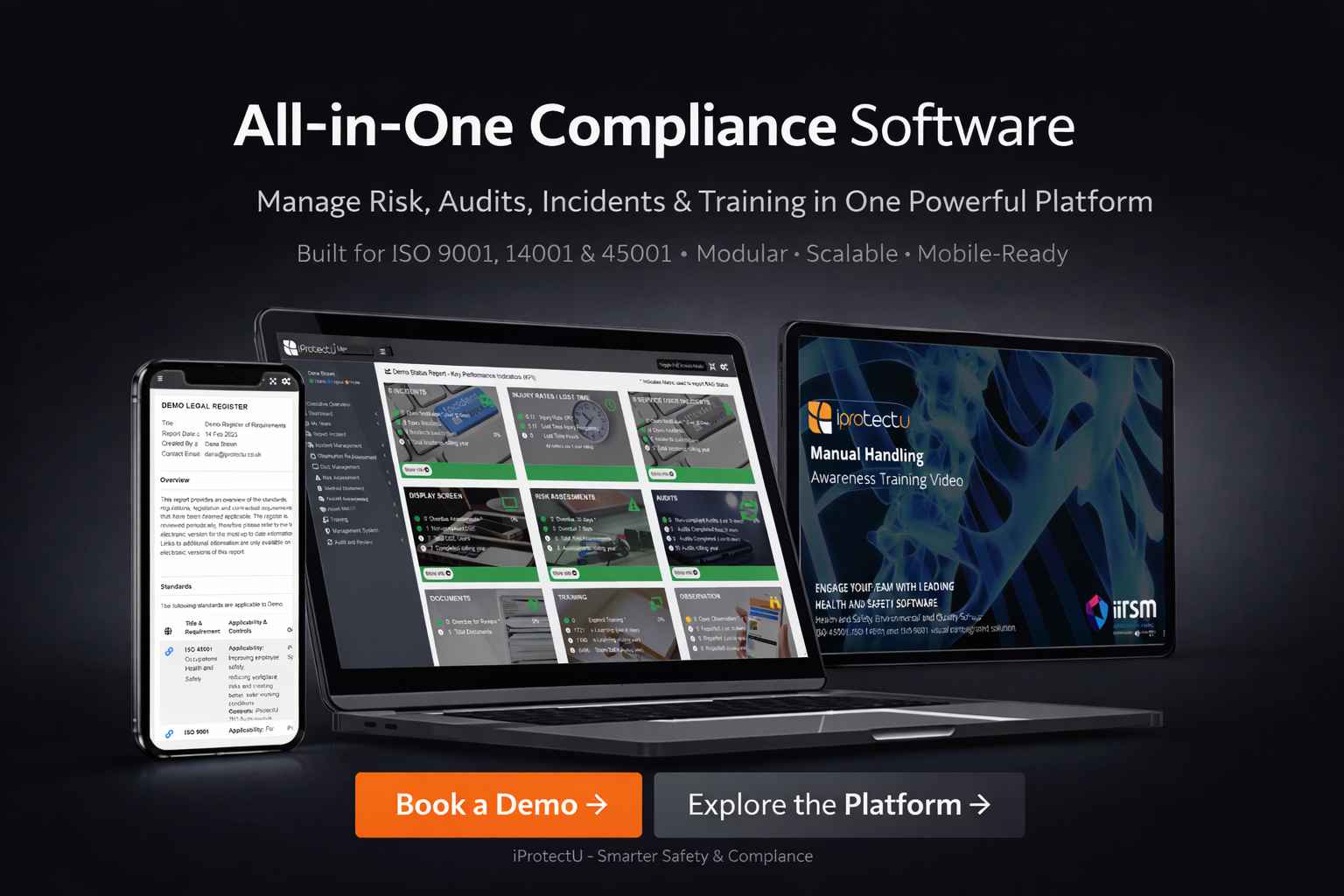
Working at height training is essential for employers who want to reduce the risk of accidents and injuries. The iProtectU EHS software can help employers to provide their employees with the training they need to work safely at height.
iProtectU EHS software can help employers to manage their working at height risks. The software includes a comprehensive library of working at height training courses, as well as a system for tracking employee training records.
The software also includes a number of features that can help employers to assess their working at height risks, such as a risk assessment tool and a hazard identification tool.
The iProtectU health and safety software provides:
Arrange your demonstration
Let us show you how we can transform your health and safety, risk and compliance management
Please choose a date and time for your demo. We look forward to meeting with you.

iProtectU is proud to support the Final Straw Foundation’s Native Oyster Restoration Project, helping restore

When a national voice like IBEC publishes your perspective, it matters.
This week, iProtectU

Modern HSE software has evolved into a strategic necessity, empowering organisations to manage risk proactively,

Managing personal protective equipment (PPE) doesn’t have to be a paperwork struggle. With iProtectU, safety

From work experience to an Amazon internship. Read how iProtectU helped empower a young talent

Modern organisations face increasing complexity when managing suppliers and contractors. Manual methods like spreadsheets and