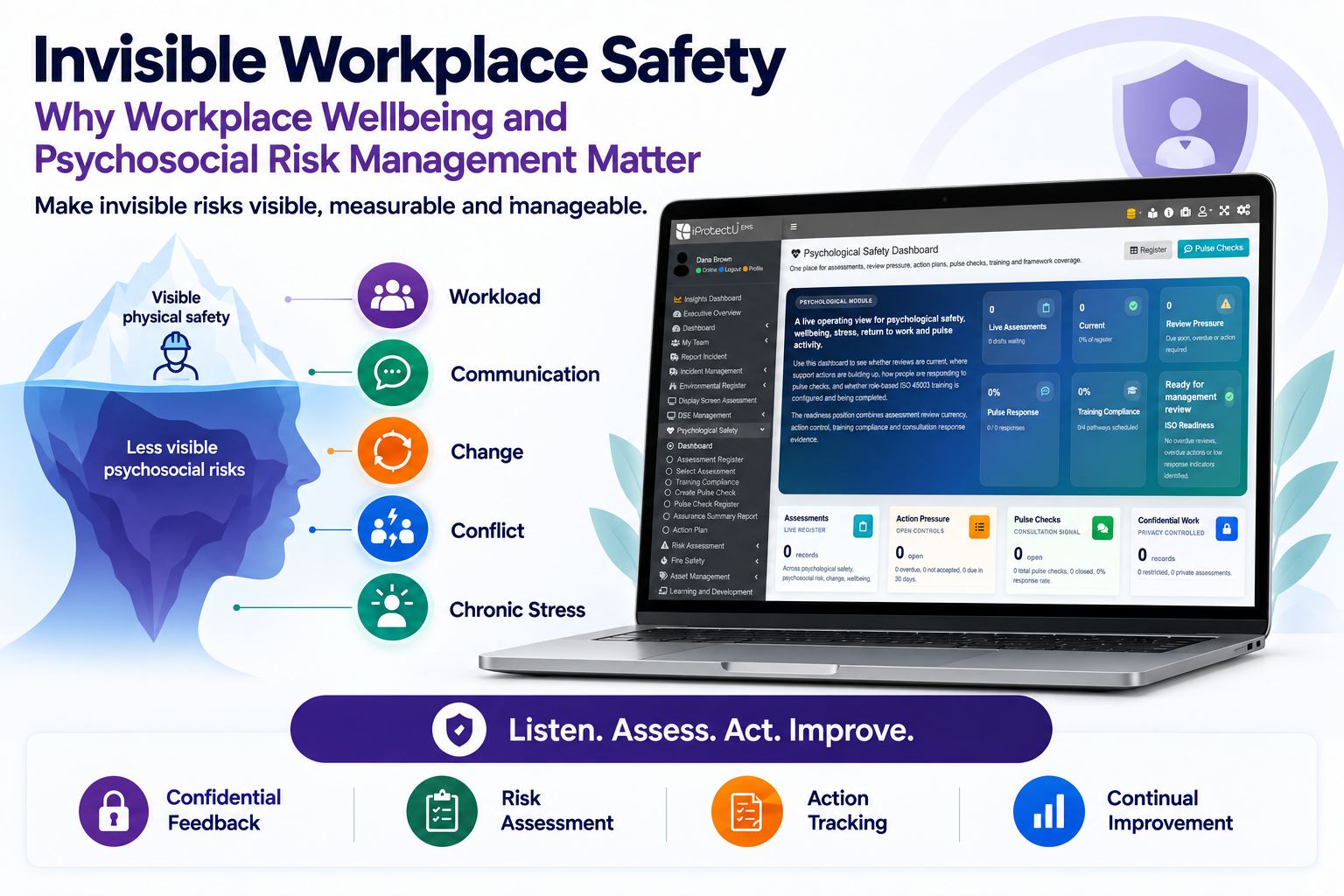
Invisible Workplace Safety: Why Workplace Wellbeing and Psychosocial Risk Management Matter
Emily MacLean explores the invisible psychosocial risks affecting workplace wellbeing and how organisations can turn

Health and Safety Software » Health and Safety Software News » Health and Safety » Safety Behaviour in the Workplace
Safety behaviour can be defined as any behaviour which reduces the risk of accidents and injuries. This can include things like wearing personal protective equipment (PPE), following safety procedures, and identifying and reporting hazards.
Psychological factors that influence safety behaviour
Organisations can create a culture of safety by promoting psychological factors which support safe behaviour. This can be done by:
Examples of psychological factors that can influence safety behaviour
The psychology of safety behaviour is a complex and important topic. By understanding the psychological factors that influence safety behaviour, organisations can create a culture of safety and reduce the risk of accidents and injuries.
The iProtectU health and safety software provides:
Arrange your demonstration
Let us show you how we can transform your health and safety, risk and compliance management
Please choose a date and time for your demo. We look forward to meeting with you.

Emily MacLean explores the invisible psychosocial risks affecting workplace wellbeing and how organisations can turn

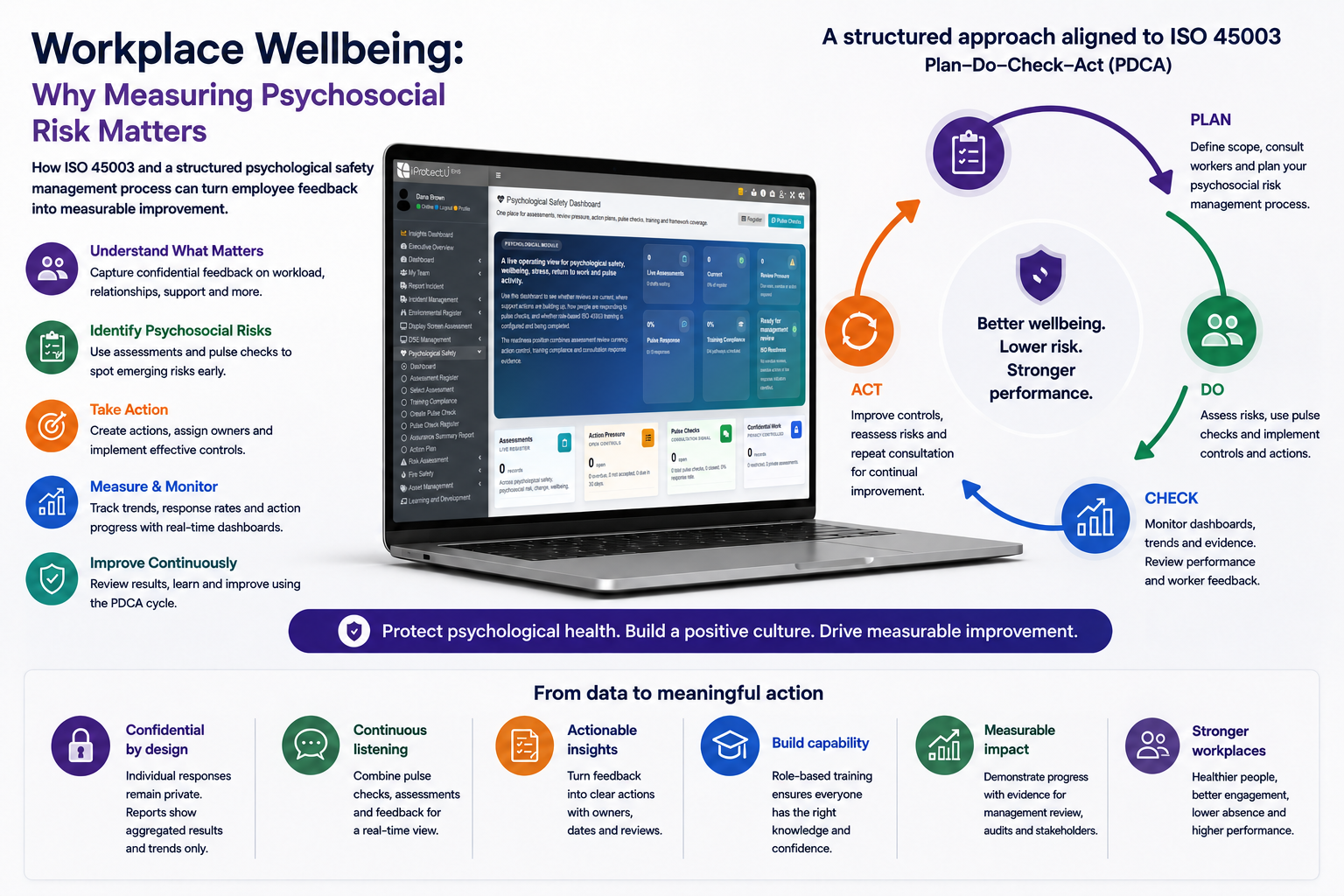
Celeste Weston explains why measuring psychosocial risk helps organisations turn employee feedback into action, improvement
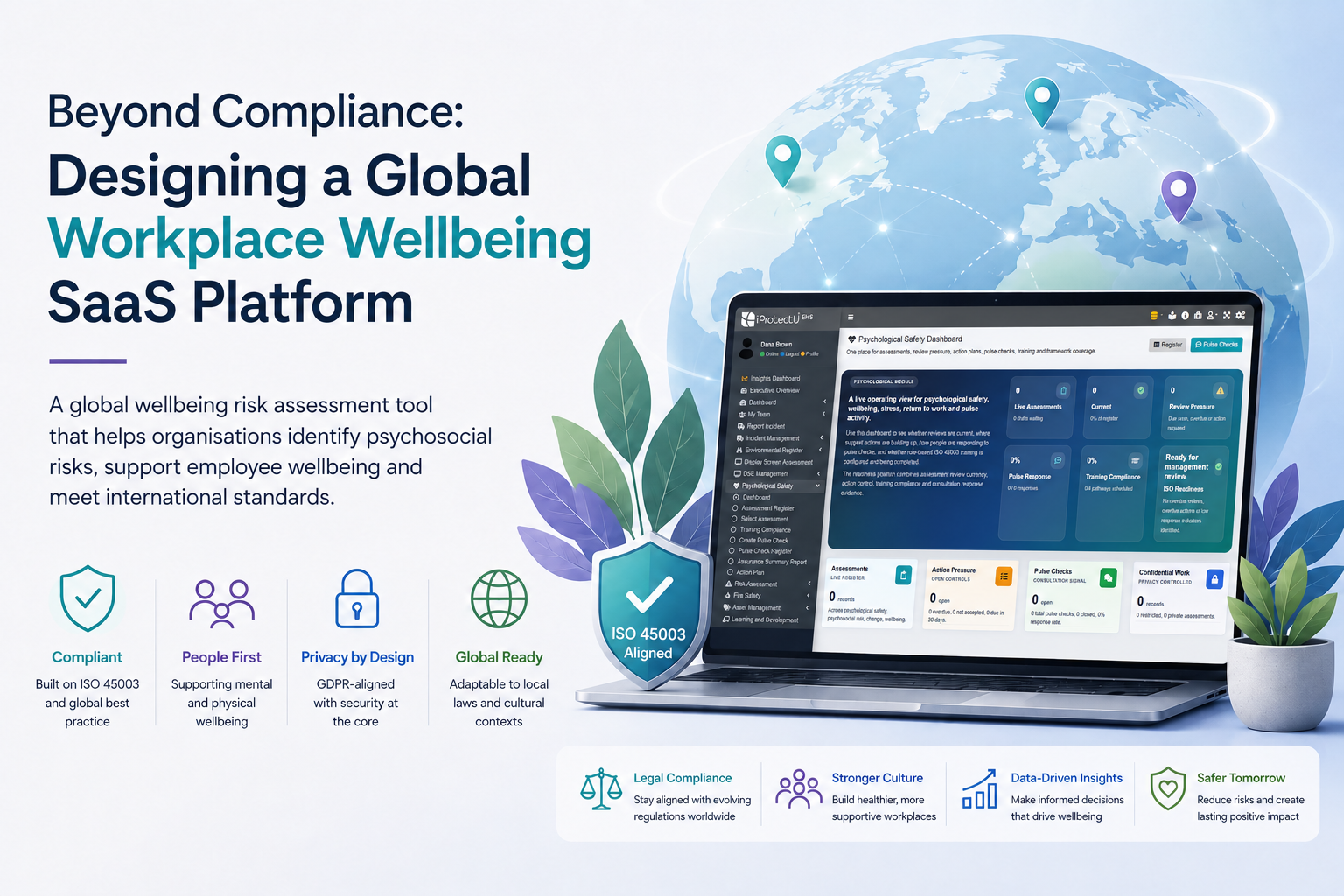
Sophia Berg Merino reflects on helping create a global workplace wellbeing platform shaped by collaboration,
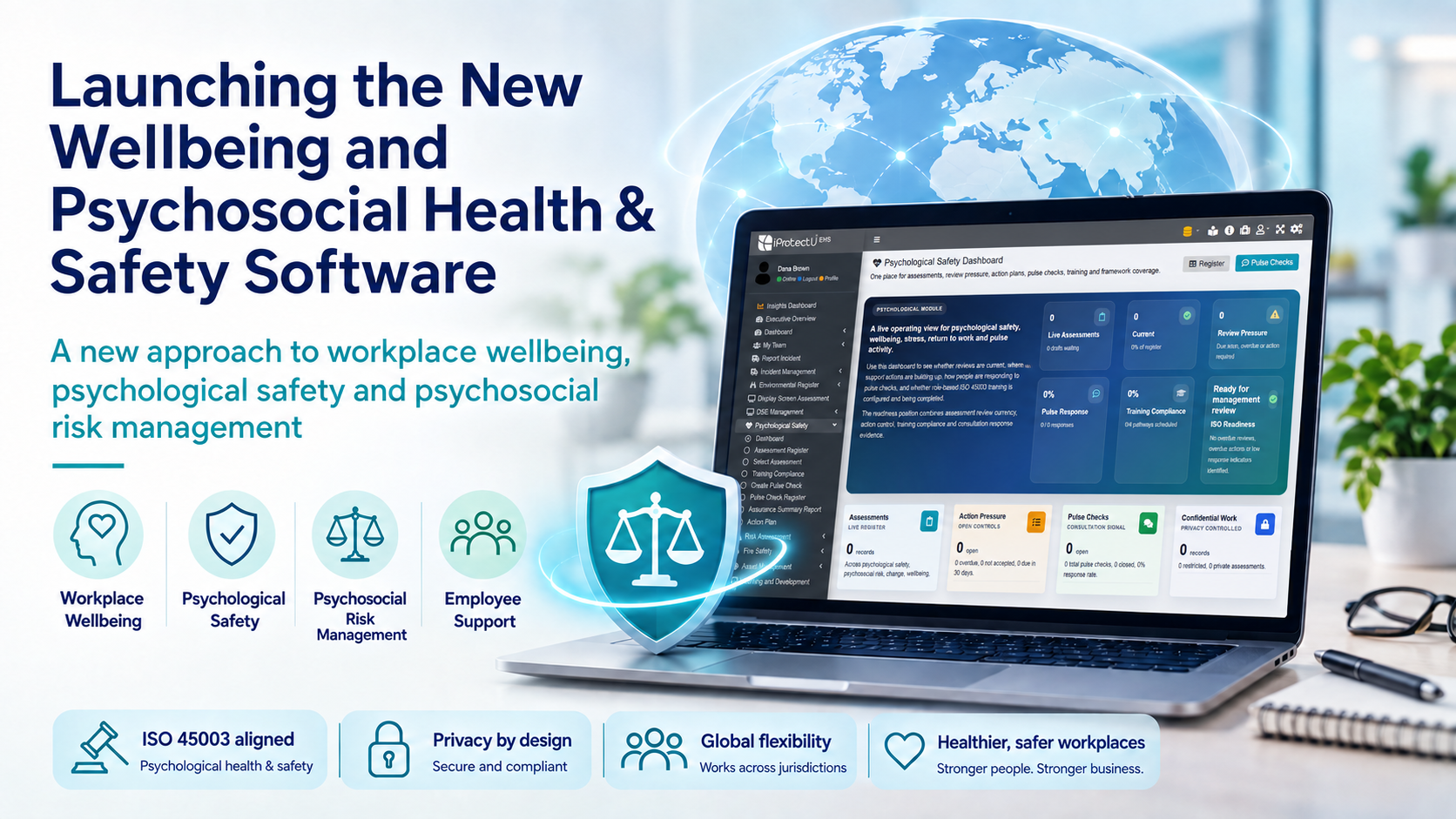
iProtectU launches new software connecting wellbeing, psychosocial risk, pulse checks, action planning, ISO 45003 training,
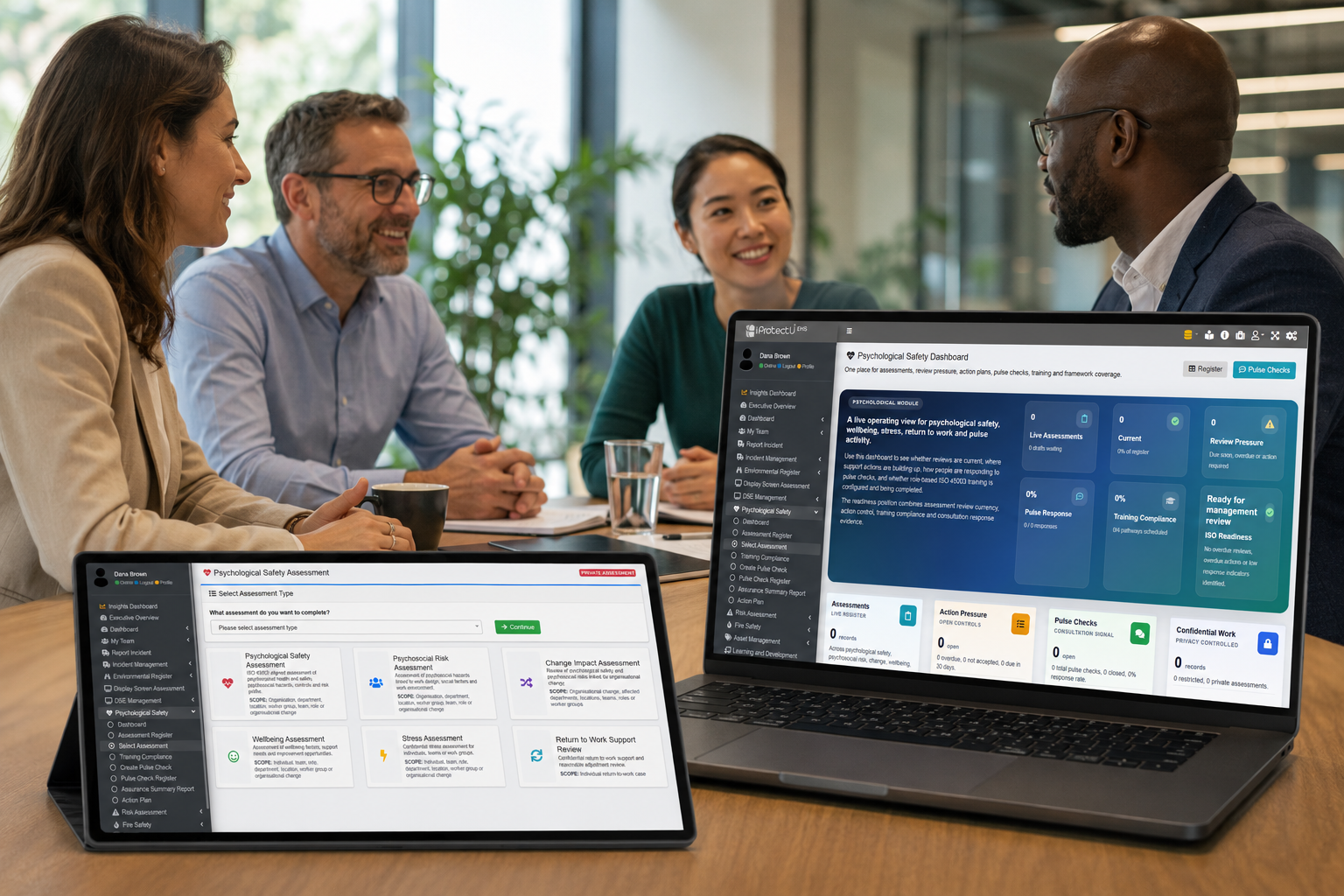
Discover how ISO 45003 turns workplace wellbeing into accountable action, stronger safety culture and auditable
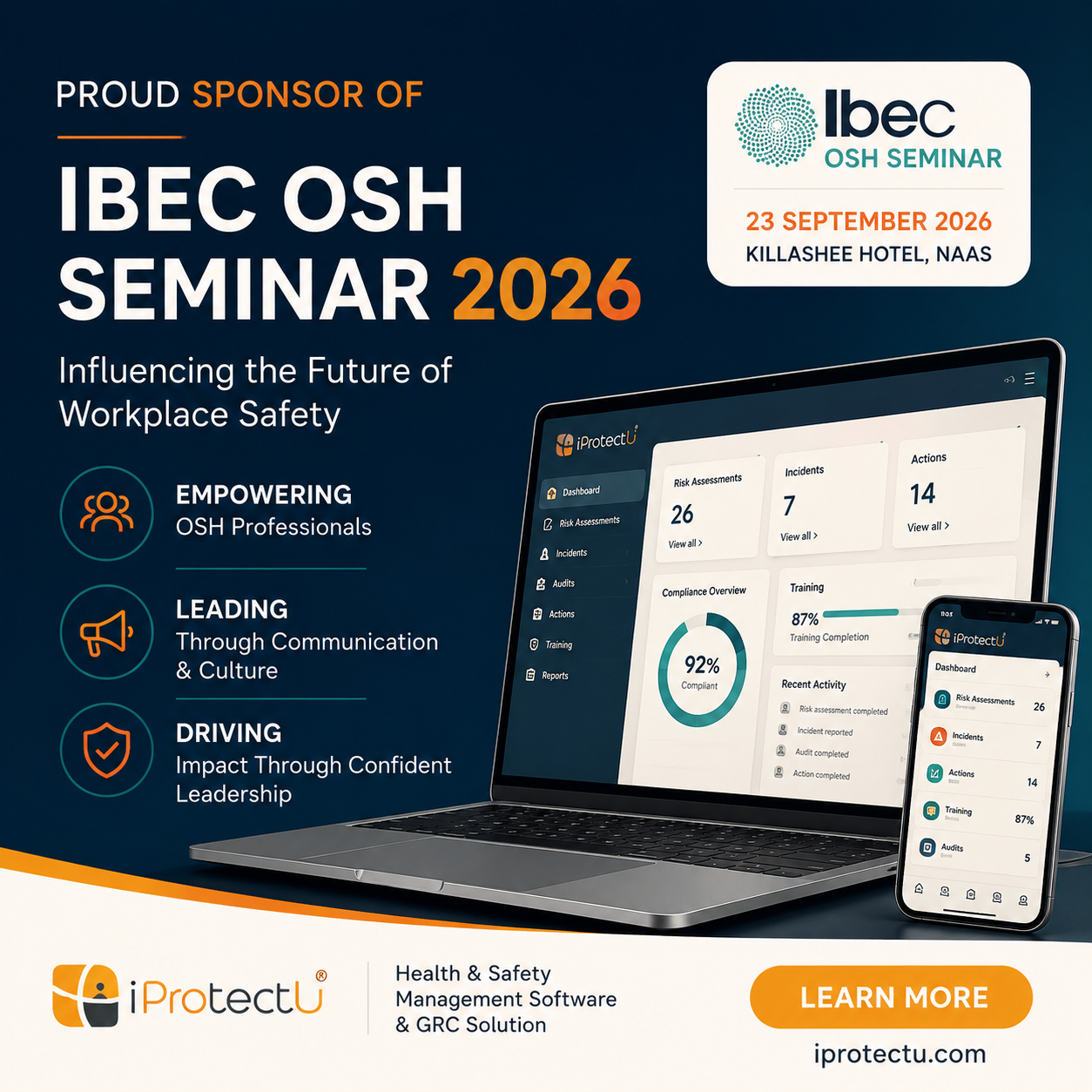
iProtectU is delighted to once again sponsor the Ibec Occupational Safety & Health Seminar 2026.